I want...

 Weight Loss
The Keto Diet Podcast Ep. #023: Beyond the Macros
March 5, 2017 By
Leanne Vogel

 December 14, 2018
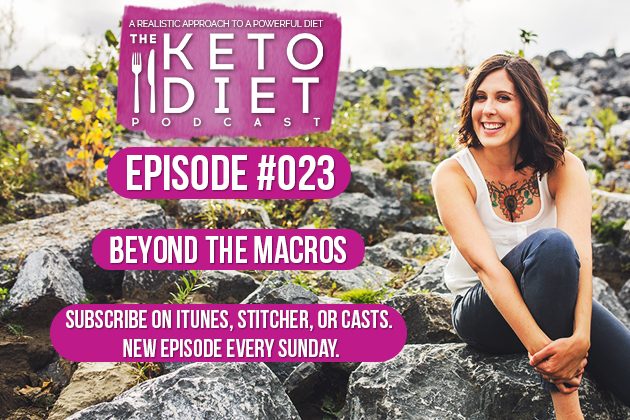
Interview with Stephanie Person, keto coach, chatting about defining keto success that goes beyond macro counting and calorie tracking.
Show Notes & Links
- Feel awesome on your keto diet with The Keto Bundle
- Get my free 7-day keto meal plan
- Subscribe on iTunes or your favorite podcast app
- RSVP for my Keto Diet paperback book tour
- More from Stephanie
Timestamp
- Signs you need to decrease workouts (15:54)
- Healing your body with keto (28:54)
- Working out fasted (51:18)
Partners of The Keto Diet Podcast

Get the nourishment your body deserves and try Vital Proteins collagen protein, gelatin or liver capsules today.

100% grass-fed & finished FERMENTED beef sticks with 1 billion naturally-occurring, gut-healing probiotics! Go to PaleoValley.com for 20% off.

Use Manitoba Harvest coupon code HPToasted for 15% off all of your favorite hemp foods.
Valid for Canada and US residents until March 31, 2017.Transcript
Leanne Vogel: You’re listening to episode number 23 of The Keto Diet Podcast. Today we’re chatting about the science you need to decrease your workouts, filling your body with keto, and working out fasted or whether or not you should, so stay tuned.
Hey, I’m Leanne from healthfulpursuit.com and this is The Keto Diet Podcast where we’re busting through the restrictive mentality of a traditional ketogenic diet to uncover the life you crave. What’s keto? Keto is a low-carb, high fat diet where we’re switching from a sugar-burning state to becoming fat burning machines.
If you’re in need of keto recipe food prep inspiration, I’ve prepped a free seven-day keto meal plan exclusive for podcast listeners. The plan is complete with a shopping list and everything you need to chow down on keto for seven whole days. Download your free copy at Healthfulpursuit.com/ketomeal. Let’s get this party started.
Hey, guys. I hope you’re having a wonderful first couple of days of March. We’ve changed the layout of the podcast a little bit this episode. I’m excited to hear your thoughts. I hope you love it! It’ll make it so that the intro is a little bit shorter so that’s exciting. We can get to the main content quicker. The show notes for today’s episode along with the full transcript can be found at Healthfulpursuit.com/podcast/e23.
The transcript is added to the post about three to five days following the initial air date of this episode. Before we get started with the show, I just wanted to chat a little bit about partners because there’s been some talk in the reviews and also the emails I’ve been receiving about why the podcast has partners and what the deal is. I like to be super transparent with this stuff.
Basically, when I first started podcasting, I had no idea the work that would have to go into it. It’s really deceiving. It takes a lot of man-hours in order to get this show going every week. We have an editor, recording equipment, transcriptions, podcast manager, quality assurance manager and so much more. The partners of the podcast help to pay for the cost of running the podcast and without the partners, there wouldn’t be a show, so all partners of the podcast, the blog, the YouTube channel and anything that I put out there are brands that I know, I love, I use and I think that you would benefit from too.
I’ll never, ever, ever partner with a brand that I don’t totally adore. This music alerts you that an ad is coming and I try to coordinate offers that everyone will enjoy including international offers, US offers, and Canadian offers. I hope you’re loving the offers that suit you and see that all of this free content on the podcast that we pull together every week, partners make up such a small amount of that and much of it can benefit the listeners. With that said, let’s hear from one of our awesome partners.
My friends at Manitoba Harvest are now partners of the podcast. Manitoba Harvest, the hemp-based food company has just added a new product to their already amazing line of scrumptious, naturally low-carb hemp products, toasted hemp seeds. They are whole hemp seeds lightly toasted and seasoned with either sriracha seasoning or sea salt. They’re crunchy super snacks, perfect right from the bag. Each third cup serving is two grams of net carbs and 18 grams of fat.
I enjoy bringing a baggy along with me to the movies or sprinkling a handful on salads. With 13 grams of omegas in each serving, you really can’t go wrong. Get 15% off your Canadian or US based Manitoba Harvest order by going to Healthfulpursuit.com/hemp and using the coupon code HPTOASTED. That’s H-P-T-O-A-S-T-E-D for 15% off. Valid until March 31, 2017. I know you’re going to love them.
We’ve got three quick announcements. The first is that when you pre-order my book before April 11th, you’ll receive access to my private Facebook group and so much more. Plus you’ll receive up to 42% off the book depending on what promotions specific book sites are providing at that time. Unfortunately, I have no control over what the book sells for but sometimes I know on Amazon and other sites, they have little sales here and there.
If you have pre-ordered the book or you’re thinking about pre-ordering the book, you can go to ketodietbook.com. I’ll include a link in the show notes and once you’ve pre-ordered, you can go to that site and scroll down and enter in your pre-order details and then you get that exclusive bundle which is really awesome. Also I’ll be going on tour. If you haven’t already RSVP’d and you live near or in the following cities, you may want to do that because some of the numbers are getting quite high to the point where we’re going to have to cut off some of the registrations which is really exciting.
Some of the places can only hold a couple hundred people and we’re getting up there. As of now I’m going to New York, Atlanta, Houston, Austin, Chicago, San Francisco, Seattle, Vancouver BC, Calgary, Edmonton, Toronto and we’re going to be adding a couple more locations over the next couple of weeks so make sure to check Ketodietbook.com/tour and that’s where you can also RSVP.
The second announcement is that I’m creating a bunch of new content for the podcast and I need your help. I want you to tell me what content to create. I want you to tell me exactly what you’re struggling with so that I can help. Please take two minutes to fill out a quick survey at Healthfulpursuit.com/survey and tell me what you’re struggling with. When you submit your survey, you’ll be entered to win $100 Amazon gift card. Again, that’s Healthfulpursuit.com/survey. The link will also be in the show notes.
The third and final announcement is that I will not be going on the Low-Carb Cruise. Originally, I had planned to go on the Low-Carb Cruise andI was going to speak, but with the book tour and book launch, the way that it is and how distant I’ve been with my friends and family over the last year writing this book, after the tour, I really need to focus on balancing out and getting some self-care and seeing people that I haven’t seen in a really long time and spending time with family.
As someone who actively promotes self-care and listening to your body, it’s something that I realize I just can’t do it all. I can’t do it all and the Low-Carb Cruise was going to take me away from home for another 10 days after being on the road for over four weeks, for the book tour and having not seen some friends since I started writing the book.
Sadly, I will not be there, but if you’re planning on going, you’re going to have the best time and all the talks look really, really interesting so I can’t wait to hear how it goes. Today, I am interviewing Stephanie Person. You may know her from her YouTube channel. Stephanie started educating herself regarding keto adaptation by trying to drive ketosis in her mother who is suffering from a terminal glioblastoma brain tumor. They gave her six months to live which prompted Stephanie to take an aggressive approach to slow cancer growth.
She dramatically lowered her carbohydrate intake and raised her dietary fats and immediately her mother’s cancer growth stopped. She is now in her seventh year of being cancer free. After her mother’s cancer remission from a low-carb, high-fat diet prescription, she then applied nutritional ketosis principles on herself and was able to enter and maintain ketosis with incredible health improvements.
She has since coached close to 100 people on the keto diet and focuses on the importance of stress and how it plays a role in their failure to adapt. This is something that I chat about quite extensively in both of my programs, Fat Fueled and The Keto Beginning just about the stress and looking beyond the macros and taking a look at what could be going on that’s in your way of adapting or feeling the best on a ketogenic diet.
Stephanie and I chat for a bunch of minutes about all of these things with an undertone of how she balances her training and workouts on keto. We talked a lot about looking beyond the macros and looking beyond calories and what’s going on, what’s the root cause of what’s happening in addition to a bunch of stuff about workouts and how to merge keto with your workouts. Adrenal dysfunction we touched on. It’s a really well-rounded podcast.
In the episode, Steph connects, delayed onset muscle soreness, also known as DOMS, to the health of your gut. I wasn’t able to find anything after the podcast that related to this. I chatted with a couple of people. I couldn’t make the connection and I just wanted to mention that because I feel like I have a responsibility for that, since we’re putting this information out there.
I don’t want anyone to think that I missed this piece, but if you have seen this cross-relative reaction and you know of studies that support it, I would love if you could email info@ketodietpodcast.com. I wasn’t able to find anything but that doesn’t mean that it doesn’t exist. I just wanted to give you a heads up because I feel like I should. I hope you enjoy. Hey, Steph. How’s it going today?
Stephanie Person: Amazeballs as usual.
Leanne Vogel: I love it, totally. I’m so excited to have you on the show. For listeners that may not be familiar with your work, why don’t you start off by telling us a little bit about yourself?
Stephanie Person: I’ve been online talking about keto for almost four years, but I’ve been doing it for nine. People who’ve gone to my website have heard me talk about how I fell into keto which was my mother had a glioblastoma which is the most deadly form of brain cancer. The research on keto because I’d heard about it prior to her diagnosis, the hearing about it got me into researching it crazy in trying to apply whatever I thought was my version of keto on to her which at that time obviously was not the correct protocol because I just didn’t really understand how it works but nevertheless nine years later, she’s still alive.
In this process, I started doing it. I use to personal train people and then I apply it on to clients and here I am today. I’m in it like I’m thick in it. That’s just how I got into keto. Prior to that, I used to be a pro skateboarder and stuff like that.
Leanne Vogel: That’s awesome. What’s your approach? How has that changed over the years because you mentioned when you first got started, it maybe wasn’t the right thing. How has that transitioned for you? What is your stance on it now?
Stephanie Person: Before, I was eating a lot of nut butters like crazy. I wasn’t eating cheese like crazy because I’ve never been a big cheese lover anyway, but I ate cheese, a lot of almond butter, peanut butter. I didn’t understand the gut, the hypothalamus pituitary axis. I didn’t understand REM state cycles. I didn’t understand polycystic ovarian syndrome. I didn’t even know what PCOS was. I didn’t know anything about autoimmune and I didn’t know anything about people developing any type of inflammation, C-reactive protein inflammation.
I didn’t know any of that. How you apply keto as far as a lifestyle regarding sleep and stress management and gut health and food sensitivities and the way you think, I didn’t consider that at all. I just thought eat a bunch of fat. I didn’t really care about where the fat source came from. That’s how I’ve evolved big time. It’s actually been through experimenting with clients when I first was applying keto on the training clients which I don’t personal train clients anymore. That’s where I started to see some of the negative and positive responses depending on what people ate.
Leanne Vogel: Huge. You trained quite a bit. What’s your training schedule and how does that look like for you with keto?
Stephanie Person: To me, my training is about my meditative part of the day or it’s my playground part of the day because I remember when I was in elementary school, you’re like, “It’s the break time hour.” You got to the bars and mess around and stuff like that. I take the same type of emotional approach so I don’t work out anymore for my endurance, or to build muscle, or to get lean, or anything at all. I only workout to use my body like I’d be in the wild, but I’m not in the wild so you’ve got to mimic some of those emotions.
I’ve added a lot of calisthenics into my workouts and people will start to see me doing bar stuff or handstand stuff. I do still lift. It’s really important to keep the bone density nice and strong on a female body once you hit that 50 range mark. I still believe in hypertrophy done in a smart way which is to build muscle. I don’t really go to the gym and do two body parts and one day off, I just go six days a week and I train way under my max. Way, way under.
I train really moderately meaning like I don’t get my heart rate up too crazy. I don’t overuse particular joints or muscles and I do a lot of time under tension but my version of that which is negative training which is you go slow. When you release, so if you do a bicep curl, you lift your arm up, that’s a positive motion which is more explosive depending on how heavy the weight is.
Then as I go down into a negative fashion, then I’ll do a three-second negative. Now Doug McGuff does from 15 to 20 negative release. That’s way too long. I don’t think it’s necessary to contract that long and so I’ll do three-second negatives with dumbbells. I use a lot of dumbbells and I use circuit machines for my legs because I busted my knee as a pro skater. Otherwise, I’m just walking in. When I walk in the gym and I see what’s available in the weight room, I don’t have a schedule because I’m no longer trying to build my traps.
Today it’s the trap day because I’m really trying to build my traps which most women don’t try to build their traps, but that’s an example, or going to the weight room and I see a lot of women doing dead lifts because they’re obsessed with building their gluts. I’m like, “Don’t forget to work different of your body. You’re just all back of the body, back of the body, back of the body,” and then that can offset your posture if you build one part of your body more than another.
I just try to use the entire body every day and I don’t train to my max so I don’t go through soreness which also not to rumble, I’m not catabolic because I’m in a state of ketosis which means I’m going through less gluconeogenesis which is the breakdown of proteins and used for glucose. When you’re less catabolic, you’re less sore which is why I can six days a week without soreness, I don’t need branched chain amino acids supplements or anything like that because I’m more anabolic and I stay to ketosis and so therefore when I go, I just play around with the gym and that’s what I do. It’s a bit winded but there’s the answer.
Leanne Vogel: Other than being in that anabolic state, how else do you use the keto diet to support that activity? Are there different training days where you’re eating different things or do you just eat keto and you train and you do your things under your max and life goes on.
Stephanie Person: A lot of people want me to do a day in the life of Steph because they want to mimic that and I’m like nine years into this. I can fast for 10 hours and I’m good to go. You fast for 20 hours and you have insulin, physiological insulin resistance or hypoglycemia and it’s not in your … Or your adrenals become over exacerbated. For me, when I train, I don’t have to consider … What I consider as a circadian rhythm. Get up, break the fast.
Now, potentially in the wild, they wouldn’t necessarily break the fast because they went through feast or famine. They wouldn’t necessarily have breakfast to eat but if they didn’t have something to eat, they were about energy conservation. People get that twist with their intermittent fasting. They get up, they don’t eat and they think that they’re doing a lot of liver, gut and kidney clearance when really their adrenals are on fire and then it’s just a domino effect of a negative response within the energy cycle of the body unfortunately for the modern human.
I get up to a breakfast and I digest the entire breakfast. I’ll probably go workout four hours after I’ve eaten my breakfast. A lot of people can’t model that schedule because they have a job to go to and they just go, “ Oh, it’s late mid-morning. I’m going to go workout.” All I do is I have the proper ketogenic macros, all day long and including my breakfast and then I’ll go workout. I’m not strategically at this juncture at nine years down the road trying to do a pre-workout MCT which is a medium chain triglyceride coming from MCT or coconut oil or partially butter or not strategically doing that whereas in the people I work with, I might create that in their pre-workout and post.
Leanne Vogel: What recommendation would you have for somebody that’s maybe just starting off with keto and their training regimen is pretty high, what can you tell people to get over that hump of … That groggy feeling that comes when you’re first fat adapting. What do you tell people in order to get through that process?
Stephanie Person: In the beginning it’s trying to fat adapt so they’re not actually not fat adapting in the first steps of doing it. They’ve actually just have to train their body to develop the enzymes to even break down the fat to use it. That’s actually the very first step. In the very beginning the brain is so addicted to glucose that it actually rejects.
Now, you can make ketones and you might actually even use it a little bit when you first … Especially when people try to fast in the beginning to drop their glucose or lower their blood glycogen but the body has a rebound effect because it gets hit really, really fast to what you’re doing and all of a sudden, the blood sugar shoots back up and the ketones drop.
When you workout, you have to consider … It doesn’t matter if you workout. It doesn’t matter if you have a job, you have to put your body more in a parasympathetic state of calm. Because we’re overstimulated, our brains are overstimulated, the brain uses up a lot of energy. If you want to train your body to uptake ketones, because we can all make ketones. Anybody who eats carbs. A right of body builders will do this. They’ll fast for six hours, boom, you produce ketones, but we want those ketones to be viable, to be used within the prep cycle and to be up taken in the cells.
When you workout, you have to ramp your workout down because working out is catabolic and so catabolism is to break down. You can’t have your body breakdown especially speeding up breaking down the amino acids and converting them into sugar. What happens when you can’t put your body more in a calm state when you first do keto is that it will go to any muscle tissue or anything where there’s protein, skin, collagen.
People can actually look quite ill on keto if they do it the wrong way. It’ll take from bone marrow. It’ll take from skin. It’ll take from muscle. It’ll take from the muscle under your neck, the tricep under the belly and just blow it up to bits which messes up your endocrine system. There’s no simple answer. It’s not like when you go workout, you just ramp it down. You have to ramp it down.
This is where the glucometer is fantastic. You go, you test your blood sugar post-workout. If you have a high glucose number, that means you’re super catabolic. Even if your workout wasn’t intense because the body is chronically under stressed, it’s just the adrenals are used to breaking down amino acids and spiking the blood sugar because that’s its protection mechanism if you were to live in the wild.
Some people can’t even do a ramp down workout. I’ll just have them take a walk. That’s how low to moderate a workout can be depending on how damaged the person is but generally if you’re going to work out, if you’re a cross-fitter and you’re not young, you’re not under 25 or 30 and you have any sleep issues, any inflammatory issues, any skin issues, any issues at all, you’re going to have to ramp down your workout even though you visually look perfect physically.
It’s quite potentially just because you’re younger and your hormonal system and your cells are stronger than somebody who’s in their 40’s but always ramp down your workout if that’s the long of the short. Ramp it down hard core and then slowly as your body begins to adjust to eating the fat and then slowly using the ketones then you can slowly increase your workout back to where you were once before without being hypercatabolic.
Leanne Vogel: What number should people shoot for? What would you consider a high glucose number after the workout?
Stephanie Person: High glucose number, anything under 80 is wavering keto being keto adapted. You can have blood glucose of 86 or a 5.3 millimolar or 5.4 millimolar for the rest of the world and still use ketones but you never really have that freaking energy. You just don’t have it so you’re using a little bit of both. It’s when the blood sugar goes under 80 and the ketones are between a 1.8 and a 3.0, and you do a journal and you regulate like you’re journaling your energy and your sleep quality, REM state cycles then you’re good to go.
If your glucose post-workout is under 80, you’re most likely using viable ketones. Then your ketones are in the right range and you feel well, it’s like a couple of things that you have to consider all at once, it’s not just the numbers. You want that glucose under 80 because if you have good glut 4 receptor development – which are these special little hands or receptors or receptors catch things and pull things into the cell, you have good receptor, glut 4 receptor, that means that if you produce glucose during your workout, you clear it out.
That doesn’t conflict with the viability of ketones if you have good glut 4 receptor development and a lot of younger people, especially guys who are already athletic, have that so that’s why they tend to do better on keto than some women do and also having more regulated, not having to deal with the PMS and the low iron from menstrual cycles and all this other stuff that puts stress on a woman’s body.
Under 80, that’s what you want if you’re adapted. If you are on your way to adapting, you can get as high as 86. 86 is pushing it, but like an 85 you could still be in that adaptation phase and it would be considered normal if your glucose was 85 post-workout but I would say it’s better to have under 80.
Leanne Vogel: More on my interview with Stephanie Person after this message from one of our podcast partners.
The show is partnered up with Paleovalley, the makers of the only 100% grass-fed and finished fermented beef stick. Each stick contains 1 billion probiotic CFU’s. We all know how important fermented foods are to the health of our gut and the strength of our immune system, especially during cold and flu season as well as boosting our energy throughout the winter months. Chowing down on Paleovalley’s fermented beef sticks provides your body with all of the beneficial bacteria it loves in one convenient little beef stick.
Their gut-friendly sticks are gluten-free, soy-free, dairy-free, GMO-free, free of chemical, additives, dye and preservative free as well as being 100% free from carbs and sugar. Made with the highest quality ingredients. Exclusive to listeners of the show, receive instant savings of 20% off Paleovallley fermented beef sticks snacks by going to paleovalley.com/keto.
If your jaw is just higher thinking about beef jerky, it’s worth noting that these tasty treats are not tough at all but moist with a little snack. The summer sausage flavor even tastes like those Hickory Summer Sausages but without the gunk. Seriously delicious. Again, that’s paleovallley.com/keto for an instant 20% off savings.
Leanne Vogel: Beautiful. You mentioned mitigating that breakdown. You were saying like blasting through tricep and all that, all these areas belly fat and things like that, mitigating that is really a matter of not just checking your glucose number but also making sure that you’re sleeping well and also ensuring that I’m sure like eating enough. Would that count?
I can’t tell you how many women specifically that I meet that are on a ketogenic diet, they’re working out substantially. They’re not eating enough, they’re blasting through a lot of their energy, they’re exhausted, they look sick and they’re wondering what’s wrong and why they can’t build any more muscle. Do you think that eating enough has a place in that area as well?
Stephanie Person: It’s just not eating enough, it’s everything. It’s not in general. It’s eating your macronutrient profile ketogenic breakdown is critical. It’s eating the right amount of protein, not too much. It’s eating the right amount of fat, never too low. If you’re eating cruciferous vegetables, then you don’t have to worry about your carbs, but a lot of people are having bacon and sausage and other fruits that have hidden sugars in it or they might have a sensitivity to cheese, the casein and cheese, and the mycotoxins, and nuts.
They might have a gut issue that’s preventing them from adapting because they have low vitamin D or B complex. They’re not getting their B’s in and if you can’t get your nutrients into the cell, then you’re not going to adapt. It’s timing up food, type of food. It’s sensitivities and prior damage to the body and then it’s your workout, type and duration, load, the quality of it essentially.
I’m going to say pretty extreme things. Most people do keto the wrong way. Most people do because they think that they can adapt on … We’re still living in a society where people need to grab their food, stick in their mouth and run out the door and it’s got to be very pleasurable. There’s got to be a dopamine response when you’re eating the dairy for example or the nuts, salted nuts. You put one in your mouth and you need another and you need another. These are dopamine responses and serotonin responses. When you’re eating something, you want another one, right? I think Pringles did once you have one or-
Leanne Vogel: Once you pop, the fun don’t stop or something.
Stephanie Person: Exactly. That’s the problem with keto. People become afraid or they’re living a life where they’re so busy that they don’t have time to prep their foods. When you’re hungry and you’re not adapted, you will just eat something that could be an allergen to your body and you’re not adapting. Then you’re going and working out on that with a lot of force.
A lot of women go and they overtrain because they think cardio and lifting heavy is going to give them results, and they don’t have the results. They don’t. We know they don’t. Visually, remember the body is a reflection of everything. The body is just a book. Look at somebody’s body and if you understand the physical body, you can read the body like each page.
They most likely have this going on, this going on, this going on, this going on because the estrogen dominance in women, because they don’t sleep well because they don’t mind the foods that they’re taking in if they’re doing a vegetarian aspect to keto. They’ll do a lot of soy products. People are thinking about the BPA’s. They’re not thinking about the blood sugar dysregulation, the poor sleep, that’s keeping them very, very estrogen dominant.
When you do keto, there is the right way and there’s the wrong way. Most people do it the wrong way because they want it to be easy. If keto becomes too complicated in their mind then they look for something that might appear easier, and so when you’re working out, you can’t just lift heavy when you’re trying to get results because you’re going to become hypercatabolic.
There’s a woman I spoke to yesterday, super sore. I was like that’s not normal. She’s like, “No, no. I work really hard. I haven’t done pushups for a long time.” I go, “That’s not normal to be super sore.” She’s like, “But I haven’t done pushups.” I’m like, “Okay, but you started off saying that you were extremely sore and that shows me that there might be something going on with your gut.” I said, “I’m not sore after I workout,” and she’s like, “Yeah, but you’ve been doing keto a long time.”
I’m like, “Yes. I’ve been doing keto long time,” and she goes, “But you’re like extraordinary.” I’m like, “No, I’m not extraordinary. I’m almost 50. I’m not extraordinary. I had other health issues in my life.” It’s about making sure that when I work out, I don’t over train ever, ever. I know exactly my limit. You know exactly when your blood pressure gets too high, when your breath increases, when you become exhausted.
People keep thinking that getting gains on the body is about “no pain, no gain”. If you’re not in pain, then you’re not going to get the gains. That is not true. The only time “no pain, no gain” is applicable to keto is cutting out all that people are eating and they’re addicted to it and then they feel emotiona pain that they have to get rid of this food.
Your workouts always have to be ramped down and they have to be methodical. Then you have to look at the high quality of ketogenic foods. It’s just not eating enough food, it’s commonly due to eating poor quality proteins, protein shakes, things that spike blood sugar, processed foods, sausages, non-grass-fed meat, just like poor quality meats, these are things that people don’t consider and then they’ll eat too much protein because of the fear of fat and then eating to that too much protein is cranking their blood sugar keeping them catabolic. I don’t know. There’s a lot of aspects.
Leanne Vogel: It’s definitely never one thing for sure. I’m curious about the connection like you said, delayed onset muscles soreness or DOMS could be related to the gut. Can you explain that a little bit more about what could be going on with the gut and how that could relate to people being really sore after a workout?
Stephanie Person: Yeah, because we grow up eating. The gut wall is compromised, your colon. You have this tight gut junctions on the colon wall and they open up. When you’re eating wheat and you’re eating dairy, I mean some people have … Here’s the thing about dairy. Why can you have butter but you can’t have cheese? Butter is primarily just the fat from the milk and the cheese has the casein in it which are the proteins. There’s two types of proteins in dairy. There’s wheat and casein.
These are growth factors to take a little baby calf and grow into a big bull. We don’t know how that’s going to affect the human body, but within a lot of like, what is it called? Med studies and the observational studies, a lot of studies, they’re starting to see correlations between lots of weird stuff going on like the Celiac’s disease and the inflammation and children with autism and all this weird stuff.
You got to factor in those two proteins that could be irritating the human body because this milk is for a baby calf, not for a human and so these things can … Especially wheat. Wheat has been genetically modified. You’ve got wheat which is X amount of chromosomes long of proteins and the shorter the amount of gluten which is the protein in the wheat, then the more good taste.
If we lengthen the amount of gluten, then it’s going to become softer and delicious. Over time, we have advertised and modified the wheat grain to have more gluten in it which appears clearly to tear up the guts of people. Children who’ve got violent behavior or adults, people who’ve got chronic inflammation, autoimmune disorders, they’re starting to tie everything to what wheat has done to the gut.
Unfortunately, the brain then does a thing called cross-reaction. It can’t see the difference over time between the wheat, the rice the barley, the sprouted, the oats, the dairy and people who got the protein in dairy sensitivity so bad that even butter they can’t handle or even ghee. It’s so bad. The gut has been compromised. Big particles of food cannot enter the blood stream. The body doesn’t understand what that is so the body begins to attack itself. That’s the autoimmune connection.
People walk around, blood sugar dysregulation. They’re eating so then we grew up on bread and then we’re eating food and pesticides and preservatives. This compromises the gut lining. Then the blood sugar goes up and down. That weakens the gut lining when you’re eating a bag of chips and some juice and then you eat for four hours and then you drink your coffee to get through your day.
That compromises the gut lining because it can’t heal with all the other extra load coming in. You start off with these foods that irritate the gut lining and then you eat these other foods that exacerbate the problem and then it can heal. Then you’re stressed because the body doesn’t know we live in the modern time. The body thinks that we’re outside but we‘re not. We keep eating mono foods. We’ll have potato chips every day. We’ll have potatoes every day.
We’re having foods that are not our design to digest, foods that aren’t too high in carbohydrates, foods that make the blood sugar go up and down, dysregulate the blood sugar and then all of this extra toxic load stress, family, text on the phone, watching TV, reading in bed, bumping your elbow like all of these things plus poor sleep create an environment where the gut can’t heal and then candidiasis starts growing out of control and then you’ve got infections in the gut.
Now the immune system is down. Now, you’ve taken antibiotics and that screws up the gut even more. You have all these things coming at you that you would never develop if you lived outside. If you lived outside, you wouldn’t be able to fight off infection and you’d be starving. Those would be the two major problems but now we’ve got all this toxic load and then we don’t sleep. That’s why when you try to build muscle, I’ll see these guys, I’ll be like, “Oh, their testosterone is low.”
You can see when a woman is super estrogen dominant when they’re out at the gym. You can see their physical body and less clothing and you’ve got to consider the toxic load that’s dysregulating their hormones. These are the things to consider when you’re going like, “Well, what’s the gut workout connection?” If your gut is hemorrhaging vitamins, you’re eating food, you’re not absorbing anything.
You’re trying to do the ketogenic diet. Your body is not taking effect. I see it all the time. It produces the ketones, they just don’t use them. The stool starts floating because they’re not absorbing the fat, it’s going right through them. Their gallbladder is all screwed up. It’s not breaking down. They don’t have the bile salts to break down or they don’t hold the bile salts to breakdown the fat. These are the reactions to the gut being compromised. It’s a big huge domino effect. All these other things going wrong in your body.
You can have a gene mutation like the MTHFR gene mutation. You can have other physical problems that your body is smart. It will know how to balance itself so you can still keto adapt and still build muscle even though you’ve got, let’s say, a family genetic propensity for something. Your body will learn how to protect itself and still survive but the entire environment must be safe for the body.
That means that sleep, stress management, high quality foods, even breathing the right way or standing or sitting the right way can help in total if you have a gut problem and you have an overgrowth of bacteria and your immune system is compromised that if you balance all the other things in your life, then the gut will start to heal. If the gut is compromised, if you have holes in your gut lining, you’re not going to absorb nutrients and you’re not going build muscle.
Leanne Vogel: There’s so many pieces to it like you’re saying and really what I’m hearing from you is balance, balance, balance and picking apart each thing and improving sleep and the foods that you’re eating, the quality of the food, it sounds like there’s a lot. There are many, many pieces and by having this toxic load and poor sleep and stress and inflammation is causing that delayed muscle, onset muscle soreness among other things. Is that fair to say?
Stephanie Person: Yeah. It means that your catabolic soreness comes from either not getting enough nutrients for muscle repair or your … Essentially that’s what it is or your body is hypercatabolic because you’re skipping meals and drinking a bulletproof coffee, and running out the door and the body is like, “I’m not adapted and there’s no gasoline in the tank.” You’re driving a car in fifth gear. If you don’t eat something, I’m going to go and I’m going to break down your muscle and I’m going to do it in three minutes so the brain can get some gasoline and that’s being catabolic.
That’s when people start to develop adrenal insufficiencies and then it connects to the thyroid. That’s why I don’t like 20 versions of keto. That does not exist. There’s only one and the one way is to heal that body as you’re trying to adapt. You can get your macros on point correct and still have problems because you didn’t address the prior damage in your life that we all have. Nobody is immune to any damage.
Soreness comes from … Technically, it comes from breaking down amino acids and converting it to glucose, but why is your body doing that. People need to go down the rabbit’s hole and find out the initial, where the first problem started or like if a guy has low testosterone or a woman has polycystic ovarian syndrome or she has hypothyroidism or her thyroid is stimulating, hormone is too high, you have to go down the rabbit’s hole and find out what you did to your body because you did it.
You did something to that body. Now, you might have been born with your mom eating poor quality foods which will affect your DNA, but once you understand that they didn’t eat well, like my mom smoked when I was in her belly. You go how is my genetics affected by what my parents ate before and lived. I’m born with these problems. Some people are born with eczema. They had skin issues from the jump.
Now that you have skin issues, what are you doing to balance that inflamed body, because that’s what the skin is when you’re having many lesions on a skin, it’s inflamed. What are you doing to make that inflammation worse or what can you do to make it better? All of these things have to be considered when you’re doing a ketogenic diet protocol.
That’s what people don’t talk about. I think I’m the only one that talks about it, ad nauseam about you could have food sensitivities. That’s going to block you from being able to adapt. You might have sleep issues. That’s going to block you from adapting. If you have PCOS or hypothyroidism, your blood sugar might run high, or you’ve got insulin resistance, we got all of these things you got to figure out and that’s why I’m speaking so pedantically or whatever. I’m being so serious. It’s because I’ve hit a wall. I do consultations every day with people with such, such severe issues and they just want to know what the macros are.
I’m like it’s way beyond macros and if you can eat cheese or not. Soreness comes from something where your body is breaking down, and now we’ve got to go find out what started this whole cascade of muscle soreness. It went way back. It didn’t just start when you did keto. It’s gone back years on how you became hypercatabolic.
Leanne Vogel: Yeah, you bet. I guess that would apply also to people that feel really depleted after a workout. Maybe they don’t do their max but I know when I was recovering from adrenal dysfunction, I mean I could walk too long and just be completely exhausted. It might not matter on the intensity of the workout but I guess what you’re saying is that soreness, or even if you’re feeling depleted after working out, you need to look at more things that just adjusting your macros.
Stephanie Person: Yeah. Are you sleeping? Are you hitting enough REM state cycles during the night because you can have adrenal fatigue or insufficiencies and adapt? If you have adrenal insufficiencies you got to go way slow. You got to slow stuff down. You got to come home from work and you got to chill. You’re at work. You have all these responsibilities. You got to look at it another way. If you have relationships with children or with partners, you have to deal with people in a different way.
Everybody is so hypersensitive. When I do consultations people often act like I’m grading them. They’ll give me, “No, but I’ve been sleeping better the last week,” and I’m like, “You’re not being graded on this.” Just tell me the truth because with the truth, we can go down that rabbit’s hole and find out what the real problem is. If you’ve got adrenal insufficiencies, then everything that you do has to go slow and easy, and take the time to reflect, and to breathe. You’re right. The body is very, very complicated, with you, with adrenal insufficiencies.
Then you have to eat. You can’t skip breakfast. If your adrenals are all frocked up, you can’t just go and throw a copy in because what’s that going to do? You can’t skip a meal. “Well, I’m not hungry. “Well, if you’re not hungry and that’s why you don’t want to eat breakfast, did you ever consider the fact that your stomach acid is low and that you’re not digesting your food? It’s just sitting in your stomach, putrefying or rancidifying all night long.
Then that keeps inflammation high and then that keeps your adrenals over-firing and then you just never get better. People always are exhausted. It’s so many moving parts to why you’re exhausted. People don’t eat or they eat too much protein, they don’t eat enough fat or they’re skipping meals or they’re not listening to their stress button. Turn off the stress button, deconstruct, don’t take things so personally.
If you go online, you see what all the trolls are saying. I’m like, “Damn, these people are really … They are responding to a video. Who cares?” Care about how your mother is, family member or daughter or your health or care about something that’s going to more impact your emotional strength in the moment rather than making a comment on the video. Really see how people are hypersensitive and that will block your keto-adaptation because your hypothalamus-pituitary axis and your adrenals are over-firing.
Leanne Vogel: Completely. I see that a lot too. It’s like why are you stressing about some video on YouTube? Take a chill pill. What some Netflix. Just chill out.
Stephanie Person: I get so many trolls. In the beginning, you think because we have to catch up to technology, I mean if we feel uncomfortable on an airplane, it’s because we‘re still mammals that should have our feet on the ground. Our endocrine system has not adjusted to technology yet and that’s why a lot of people have all these disorders even if they have a weakness within their genetic gene structure within their DNA.
If you can manage, if you balance … Like we said before, you said about balance. If you can balance this particular physical stress with this particular physical action or thought, you can heal, but if people … Where I used to do videos and people tell me, “Oh my god, you’re talking too long,” I’m like, “So?” The way that they do it is so, “I want instant gratification. You’re not speaking in the way that I want you to speak.” Now instead of reacting to it personally because I’m not … I don’t know these people. I have to catch up with the modern time.
I just delete, block, move on because that’s the only way I’m going to keep my sanity. That’s what I’m saying, like everybody is different. What makes us very individual is how we deal with stress, but genetically, we are more alike than we are different.
Leanne Vogel: Something that I’ve started practicing is like mental health before anything else and that’s been actually really helpful for my own healing and staying on focus on myself is just like “is this improving my mental health?” I’m really putting my mental health as a priority. Engaging in negative comments, that’s not going to help me in staying focused.
More on my interview with Stephanie Person after this message from one of our podcast partners.
The podcast is partnered with Vital Proteins, my favorite collagen brand of all time. I use their collagen peptides in my daily rocket fuel latte to add body loving protein to my cup without changing the taste or making the mixture chalky like regular protein powders can do. Their gelatin, I had a couple of scoops to warm dishes like spaghetti sauce, gravy, soups or stews, and nobody can even tell the difference. When I’m out on-the-go, I always have a couple of their stick packs hidden away in my purse so that I can add them to my coffees or teas when I’m out-and-about.
Vital Proteins collagen peptides are sourced from grass fed, pasture raised bovine hides, to ensure a natural high quality and sustainable source of this ancient nutrient. Collagen is the most abundant protein in the body, ensuring the health and vitality of our skin, hair, tendon, cartilage, bone and joints. Get the nourishment your body deserves and shop for your favorite Vital Proteins products here.
Leanne Vogel: You mentioned a little bit earlier about fasting and adrenal dysfunction. What are your thoughts on fasting with working out? You mentioned you eat and then you wait about four hours until you train. What are your thoughts on waking up, fasting, doing your workout and eating later?
Stephanie Person: I mean people are either going to love what I’m going to say or they’re just going … because they’re too hyper-sensitive. I don’t know. Fasting is dieting. We’ve replaced the names, these diet trends over the years. It’s embarrassing. It’s embarrassing to go to conventional doctors and they throw medicine at you. Then they want to up the dose. What I’m saying is … I know that you’re like, “Where is she going with this?”
You’re hearing things from medical experts saying fasting is great. Then we believe it. Then we’re told that butter is going to give you a heart attack. Then we believe it. It’s like people don’t take a step back and just analyze things for a second. If somebody is not eating and they drop weight, we would say, “That’s not healthy.” You should probably eat something.
Leanne Vogel: Yeah, it’s a paradigm shift. Yeah, completely. You’re looking at it completely different.
Stephanie Person: Right. It could be the exact same actions, like when everybody did the hCG diet and they dropped their calories down to 500, that would be fasting, isn’t it? You’re giving nice liver and kidney clearings and you’re giving your gut a break from all that digestion, but people became hyper-sick on the hCG diet. Their immune system got frocked up.
They start gaining the weight double back because you have to consider how the body works. Don’t just listen to diet trends, don’t even pay attention to keto diet in a general swoop because you’re going to screw your body up. I say to people, “Keto is either gonna help you or it’s gonna kick your ass and hurt you.” That’s the same thing with intermittent fasting.
Now, I’ve worked with over 3,000 people and a lot of them have fasted and none of them are healthy because of it. Not one person, not one. When you deprive your body … Here’s the thing. We’re not hunter-gatherers. We constantly are over-lit so our adrenal is never going to break. Never. They don’t. If you guys could see me right now, I have my computer on Skype. I’ve got my cellphone in front of me. Why do I have my cellphone in front of me? Then I got my iPad next to my cellphone. I have three devices right in front of me.
You know what, if we weren’t on this subject, I wouldn’t even be thinking about it. It’s auditory. It’s just what I do. It’s right in front of me. That’s what I do but those devices are going to overstimulate me. If I ask you this question here, Leanne. If you’re not adapted, and you’re fasting, you get up in the morning and go to work. You don’t eat until 2:00. Where’s your body going to get the energy from?
Leanne Vogel: Not fat because you’re not fat-adapted, so probably muscle.
Stephanie Person: Right. Why would your body go to the muscle?
Leanne Vogel: It doesn’t know that fat is an option. It’s not fat-adapted.
Stephanie Person: What’s it going to do with that muscle?
Leanne Vogel: Break it down, eat it up.
Stephanie Person: That’s right. And uses energy because the brain uses so much energy. Now if we lived outside, we would take breaks.
Leanne Vogel: Totally.
Stephanie Person: You see people when you see these like remote village, tribes, people like the Amazon forest. They’re chilling. They’re communal. They’re releasing stress. I mean not all the time because they have to go through getting food constantly. That’s one stress. There’s the environment, there’s fighting between people, there’s infection. The amount of decisions that we have to make is beyond measure to what they would have to decide.
Their focus group would be, “I’m hungry, I’m hungry. I need to eat. Let’s go get food. I’m tired, I’m tired. Let’s rest. I’m sick. Let’s rest.” We’re like, “I’m sick. I have to go to work. I have bills to pay. I’m not going to listen to my body. I’ve got to go to work. No, I’ve got to make these 20 decisions right now and that’s going to crank my adrenals up to a level that it’s laughable what our hunter-gatherers had to go through with…
Leanne Vogel: What you’re saying is more just like listen to your body and for you at the beginning of the episode, you were talking about how you’re able to fast easily for 20 hours but granted that’s because you’ve been eating keto for quite some time and that’s just very natural for your body.
Stephanie Person: Let’s just put it this way. It’s not natural for my body at all to fast. I also am a very adrenal person. I’m over-lit. I fasted because when I was in Asia, and there was literally nothing I could stick in my body that was safe, so I opted not to eat until the very next day. That’s the only time I’d ever fast that long. The body has incredible detoxification pathways that if you just eat properly and got some dang sleep and having enough electrolytes, your liver, your kidney, and your gut will clear itself out on its own without forcing it to.
You’re going to force yourself to have all these clearance while you’re running around and overstimulating your adrenals. I mean it’s counterintuitive. The body is going rob from Paul to give it to Pete. That’s not balanced. If you don’t eat something and you are not adapted and you wake up. If you don’t eat something and you are not adapted and you wake up in the morning, your body will become catabolic. It’ll break down muscle, convert it into glucose and send you out the door.
Now, some people will go and fast for a week and their blood sugars were always in the hundreds and then they fast and it drops. They’re like, “Stephanie, my blood sugar dropped when I did this, when I fasted. I’m like, “Okay. Let’s give it time. Let’s just wait. Three weeks later, the blood sugar shot back up again. The blood sugar will rebound. Sometimes taking a break and all that good stuff people are eating is actually a break to the body.
People eat too fast, they eat poor quality food. You’re darn right, that’s going to put less stress on the body. Eating food is a big … It’s a job. I try to explain it to people if you eat at night, really late, the body is like, “I’m trying to chill out. This is the melatonin parasympathetic part of my day of relaxing. Eating is work. It’s like building a house.”
The body doesn’t digest as efficiently as it does in the day when there’s more cortisol in the system. It’s a very hard load. Yes, sometimes when people aren’t eating they’ll notice improvement on the short-term. The same thing when you see things like vegan diets, so people will see a period of time where the body actually is like, “Thank you for cutting out horse crap and all these processed food and focusing on more whole foods or plant-based whole foods.”
Then the body rebounds over time. If you don’t eat, you put your body at risk to stimulate the adrenals, to produce more adrenaline than cortisol, then breakdown amino acids through gluconeogenesis and then that’s the problem. Peoples’ adrenal insufficiencies worsen. They start losing their hair. Their thyroid becomes underactive, and this is what I see over and over and over again. Then you get guys who are like 25 like, “Bro, I fast and I got the best results ever.”
Leanne Vogel: Totally.
Stephanie Person: I’ll be like, “Let me hang out with you a day. Let’s work out for a week together and let me see how low your energy is. It’s very subjective. People see their scale go down and they’re like, “I’m losing weight. That’s all that matters.” That’s what one woman said. She goes, “I’m losing weight and that’s all that matters.” I’m like, “Okay. Do you don’t care if you’re losing like bone marrow and bone? What about this skin under your neck? You don’t care about this area? Okay. Floppy belly? Okay. Let’s just look at the weight on the scale.” Sorry. I’m going off on a tangent. Clearly, I have got a lot to say, but, yeah, sorry.
Leanne Vogel: Which is why I wanted to have you on the show, because you’re so passionate about what you do and I know that that translates so well and I have so many other questions for you and so many things to chat with you about but we’ve totally hit our time.
Stephanie Person: We’ll have to do a part two.
Leanne Vogel: Yeah, totally because there’s so much on this topic and I think we just touched a little bit of the iceberg but there’s so much left underneath. I definitely would love to have you on the show again. Where can people find you if they want to learn more or work with you or watch some of your videos?
Stephanie Person: First, I just want to apologize to people, I didn’t realize I had eaten up all that time. I just want to say this so people understand because I make keto sound negative. If you really work hard like you’re training for the Olympics to understand your health, where you came from, who you are, go down that rabbit’s hole and learn more about your body, then the effects of keto, the purpose of doing this is beyond measure.
It is the most amazing experience that you’ll ever go through in life once you’re fully keto-adapted. It should not be easy, but it only works for those who are willing to put in the work. I don’t want people to be discouraged from doing keto, I just want them to take it more seriously and do not look at it as a diet trend, but as a way to improve your health, vitality and to anti-age. It’s amazing.
With that said, you can reach me on my website which is Stephanieperson.com like a person, like a human being. Stephanieperson.com. My Facebook fan page is Stephanie the Business Person. Not as in business as the physical body being the business. My Instagram is Stephanie Ketogenic and I am going to Australia next month to do a keto tour, so be looking out for that, and I do 30-day challenges only to teach people how to adapt and not to lose weight. I want to teach people how to get healthy. That’s my whole purpose.
Leanne Vogel: Brilliant. I love it and I love that inspiring message at the end there too. I couldn’t agree more so thank you so much for mentioning that for sure.
Stephanie Person: Thank you. I appreciate you reaching out to me and I love what you’re doing, Leanne, so thank you.
Leanne Vogel: Thank you very much, and the show notes for today’s episode and the transcript as well can be found at Healthfulpursuit.com/podcast/e23. That does it for another episode of The Keto Diet Podcast. Thanks for listening in. You can follow me on Instagram by searching Healthful Pursuit where you’ll find daily keto eats and other fun things. Check out all of my keto supportive programs, bundles, guides and other cool things over at Healthfullpursuit.com/shop and I’ll see you next Sunday. Bye.
This entry was tagged: carb up, eating high-fat, eating keto, eating low-carb, fat-adapted, how eat keto, keto basics, keto diet, keto for women, keto life, ketogenic diet, ketogenic for women, ketosis, low-carb paleo, what is keto

Hi! I'm Leanne (RHN FBCS)
a Functional Medicine Practitioner, host of the Healthful Pursuit Podcast, and best-selling author of The Keto Diet & Keto for Women. I want to live in a world where every woman has access to knowledge to better her health.